What the Anion Gap Measures
This anion gap is a derived value that assists clinicians interpret lab values by assessing major electrolytes in the blood. An Anion Gap Calculator relies on key serum chemistry numbers to estimate whether there are unmeasured ions affecting acid-base balance. In practice, it is a helpful diagnostic clue for identifying a hidden metabolic disturbance, especially when blood test results indicate metabolic acidosis.
Most assessments focus on sodium, chloride, and bicarbonate. Sodium represents the main measured cation, while chloride and bicarbonate are the primary measured anions. The gap reflects the difference between what is measured and what is not directly measured. Those unmeasured components can include albumin, phosphate, lactate, ketones, and other acids, which is why the number has important clinical significance.
Because the anion gap is derived from a routine electrolyte panel or basic metabolic panel, it is often available quickly and can serve as a practical screening tool. It does not diagnose a condition by itself, but it helps determine causes of an abnormal serum chemistry pattern and can support diagnosis when paired with the clinical picture.
How Protein Levels Influences Assessment
Total protein gives context that a calculator cannot deliver on its own. Total protein is made up primarily of albumin and globulins, and these serum proteins affect the distribution of charged particles in blood. Because albumin is a major unmeasured anion, changes in protein levels can shift the apparent anion MUDPILES anion gap mnemonic gap without any new acid load.
This is where protein binding counts. Albumin holds many molecules and carries a net negative charge, so lower albumin often means a lower measured anion gap. If total protein is reduced, the gap may look deceptively normal even when an acid-base disorder is present. That makes total protein a valuable clue in lab interpretation, especially when the calculator output seems inconsistent with symptoms or other lab findings.
Globulins also matter, though usually less than albumin in routine interpretation. High globulin states can alter the balance of measured and unmeasured ions, while low globulin values may point toward broader protein abnormalities. Looking at total protein alongside albumin helps refine the protein status behind a result and improves the overall clinical significance of the calculation.
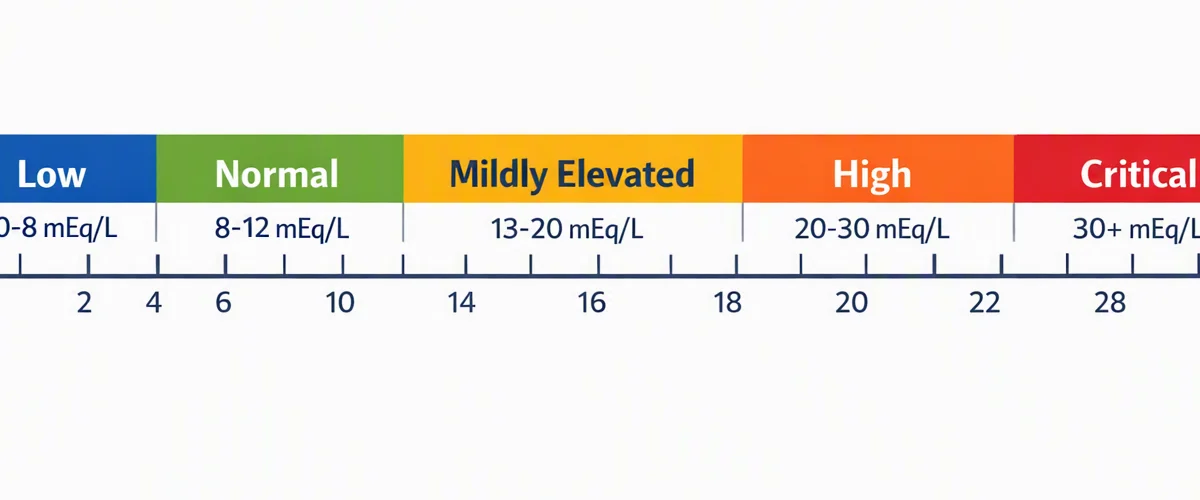
In short, the anion gap is not just a number to calculate anion gap; it is a number that should be read in the context of protein concentrations, hydration status, and the rest of the lab panel. When used this way, an anion gap calculator becomes a practical medical calculator that supports better decisions rather than a standalone result generator.
Anion Gap Formula & Calculator Inputs
A standard anion gap formula is usually written as:
Anion gap = Sodium - (Chloride + Bicarbonate)
Some testing systems use potassium, but many routine calculations omit it. This method can vary by laboratory, so the reference range should always be interpreted using the same method as the report. This is one reason a calculator should be treated as a reference rather than a replacement for formal laboratory interpretation.
A useful Anion Gap Calculator will ask for the main lab values from the basic metabolic panel or related serum chemistry testing. They usually include:
- Sodium Chloride Bicarbonate Total protein Albumin, when available
When total protein is included, the calculator can help users think beyond the raw gap and consider whether the patient has altered serum proteins. This is important because the same numeric anion gap can mean very different things depending on protein status, acid-base context, and the rest of the electrolyte pattern.
In a typical workflow, the calculator functions as an electrolyte imbalance reference aid. It arranges data from the blood test and makes it easier to spot whether the gap is elevated, normal, or potentially misleading. That clear layout is especially important when reading results alongside symptoms or other components of a broader diagnostic evaluation.
Adjusting the Anion Gap for Albumin and Protein Status
Albumin correction is important whenever albumin is low or when the total protein pattern suggests altered blood proteins. Because albumin contributes substantially to the unmeasured anions in blood, hypoalbuminemia can reduce the observed gap and hide clinically important acidosis. In that setting, the corrected anion gap gives a more accurate picture of acid-base balance.
Clinicians often use a correction approach that adjusts the measured result upward when albumin is below normal. The exact adjustment can vary by method, but the purpose is the same: correct for albumin so the gap better reflects the true acid load. This is especially useful in patients with chronic illness, inflammation, poor nutrition, or protein-losing states.
Total protein adds another layer of interpretation. A low total protein can suggest that the albumin reduction is part of a broader protein deficit rather than an isolated lab abnormality. A high total protein may suggest an increased globulin fraction, which can also influence the overall charge balance seen in serum chemistry. In both directions, protein context changes how confidently one can use the measured anion gap.
It is important to remember that the corrected value is a clinical estimate, not a perfect physiologic measurement. Still, it improves lab interpretation and can reveal a hidden metabolic abnormality when the original number appears deceptively normal. For this reason, the combination of total protein and albumin is often more informative than either value alone.
Elevated Anion Gap vs Normal Anion Gap
Telling apart between high anion gap metabolic acidosis and normal anion gap metabolic acidosis is one of the main reasons this calculation is used. Both are types of metabolic acidosis, but they arise from different mechanisms. The gap helps identify whether unmeasured acids are increasing or whether bicarbonate is being lost and replaced by another measured anion, usually chloride.
A high gap usually suggests that unmeasured acids are present in excess. That makes the calculation an important indicator of an acid-base disorder. A normal gap, by contrast, suggests that the bicarbonate drop is balanced by a rise in chloride, which can occur in gastrointestinal loss, renal tubular problems, or other processes of bicarbonate depletion.
Total protein and albumin are important in both situations because low protein can reduce the apparent gap and make a high-gap disorder look normal. That is why a calculator that includes protein context is more useful than a simple formula alone. It helps users reduce the risk of missing clinically important acidosis when the serum chemistry pattern is influenced by protein levels.
Interpreting the gap also depends on the reference range reported by the lab. Different methods and analyzers may yield slightly different expected ranges, so the result should be compared with the specific laboratory’s range rather than a generic value. That increases the reliability of the clinical interpretation.
Typical Causes of High Anion Gap
Various recognized conditions can elevate the anion gap by adding unmeasured acids in the blood. Some of the key are lactic acidosis, ketoacidosis, renal failure, and exposure to toxic alcohols. These disorders are important to the differential diagnosis because they can present with similar lab abnormalities but require different management.
Lactic acidosis occurs when lactate accumulates, often because of inadequate oxygenation, shock, severe infection, or other forms of tissue stress. Ketoacidosis can occur in diabetes, starvation, or alcohol-related states and leads to elevated ketone bodies. Renal failure impairs the body’s ability to excrete acids, allowing them to accumulate. Toxic alcohols such as methanol or ethylene glycol can produce a dangerous high-gap pattern and require urgent recognition.
These issues can present with a different clinical story, but the anion gap can be the first numerical sign that something serious is happening. This is why an Anion Gap Calculator is often used as a quick diagnostic clue when interpreting blood test results. It does not replace clinical judgment, but it can guide attention to the right category of illness.
Protein levels matter here as well. If albumin is low, the measured gap may underestimate the severity of the underlying problem. In that case, a corrected result may more fully represent the true burden of acid accumulation and help support diagnosis more accurately.
When Reduced Total Protein Changes the Picture
Low total protein changes the interpretation of an anion gap in a delicate but significant way. The result may appear less concerning than expected because the body has a smaller number of negatively charged proteins, especially albumin, contributing to the unmeasured anion pool. This can make a serious disorder look smaller on paper than it is in reality.
Conditions associated with low total protein include malnutrition, liver disease, and nephrotic syndrome. In malnutrition, the body may not have enough protein intake or absorption. In liver disease, protein synthesis can decrease. In nephrotic syndrome, protein is lost in the urine. All of these can reduce albumin and other serum proteins, affecting protein status and therefore anion gap interpretation.
When total protein is low, the calculator should not be used as a simple yes-or-no screen for acidosis. Instead, it becomes part of a more comprehensive reasoning process that includes albumin, the rest of the electrolytes, and the overall clinical picture. A low-protein state can be a diagnostic clue that the measured gap may need correction before deciding whether the patient has metabolic acidosis or another acid-base disorder.
For that reason, the most useful approach is to interpret the anion gap together with total protein and albumin rather than separately. Doing so improves clinical significance and reduces the risk of missing an acid-base problem hidden by low protein concentrations.
How to Understand Outcomes in a Clinical Context
Medical assessment begins with the reference range used by the laboratory. A value higher than the expected range may point to unmeasured acids, while a value within range does not always exclude a problem if albumin is low. That is why an anion gap should be read as part of a complete diagnostic evaluation, not in isolation.
The next step is to review the full electrolyte picture. Look at sodium, chloride, and bicarbonate, then compare them with total protein and albumin. Ask whether there is an electrolyte imbalance, whether the patient has signs of an acid-base disorder, and whether the lab pattern fits the clinical story. This is the practical value of using an Anion Gap Calculator alongside the rest of the serum chemistry data.
From there, the result can help organize the differential diagnosis. A high corrected gap pushes the evaluation toward lactic acidosis, ketoacidosis, renal failure, or toxic alcohols. A normal corrected gap may suggest bicarbonate loss or another non-gap process. A low-protein pattern may explain why the uncorrected number seems less striking than expected.
Effective lab interpretation also means considering trends. A single result may be less informative than serial blood test results over time. Changes in total protein, albumin, and bicarbonate can reveal whether the metabolic disturbance is resolving, worsening, or being masked by protein abnormalities. Used this way, the calculator becomes a true support tool for clinical reasoning.
Frequently Asked Questions
What is an anion gap calculator used for?
An anion gap calculator is used to calculate the anion gap from serum chemistry values and help interpret acid-base balance. It supports lab interpretation by showing whether there may be an unmeasured acid load, which can be a useful screening tool in metabolic acidosis and other acid-base disorder patterns.
How does total protein affect anion gap interpretation?
Total protein affects interpretation because it reflects the amount of albumin and globulin in the blood. Since albumin is a major unmeasured anion, low protein levels can make the anion gap appear lower than expected. That means protein status can change how the same number is understood clinically.
Why should albumin be taken into account when calculating the anion gap?
Albumin must taken into account because it strongly affects the unmeasured anion pool. With hypoalbuminemia, the calculated gap can be artificially low. Using albumin correction provides a corrected anion gap that more closely reflects the real acid-base state and increases clinical significance.
What does a high anion gap usually mean?
A high anion gap usually indicates a high anion gap metabolic acidosis, meaning unmeasured acids are accumulating. Common causes include lactic acidosis, ketoacidosis, renal failure, and toxic alcohols. The result should always be assessed alongside symptoms, total protein, albumin, and the complete diagnostic evaluation.
Can low total protein change the expected anion gap result?
Yes. Low total protein can affect the expected result because it often reflects reduced albumin, which lowers the measured anion gap. This can obscure an underlying disorder and make the result look more normal than it truly is. In that setting, protein levels and albumin correction are important for accurate laboratory interpretation.